Crypto++ Library is copyrighted as a compilation and (as of version 5.6.2) licensed under the Boost Software License 1.0, while the individual
files in the compilation are all public domain.
The current version of Crypto++ supports the following compilers:
Visual Studio 2003 - 2022
GCC 3.3 - 13.1
Apple Clang 4.3 - 12.0
LLVM Clang 2.9 - 14.0
C++ Builder 2015
Intel C++ Compiler 9 - 16.0
Sun Studio 12u1 - 12.7
IBM XL C/C++ 10.0 - 14.0
For detailed build status and notes on various compiler/OS/CPU combinations as well
as information about compiling earlier versions of Crypto++, please see this wiki entry.
The downloads for the most recent Crypto++ libraries from the last several years are
below. If you need older downloads, from Crypto++ 5.5 to Crypto++ 2.3, then visit the
Downloads page. The Downloads
page provides checksums for all releases hosted on the website. Release signatures
can be verified using GnuPG according to Release
Signing.
Remember to use the "-a" auto-convert text files option when unzipping on a
Unix machine. After downloading, please read the Readme.txt included
in the zip archive for build instructions and other important notes.
While You Are Downloading
Take a look at the related links page. It
includes links to crypto libraries for other languages, products that use Crypto++,
etc.
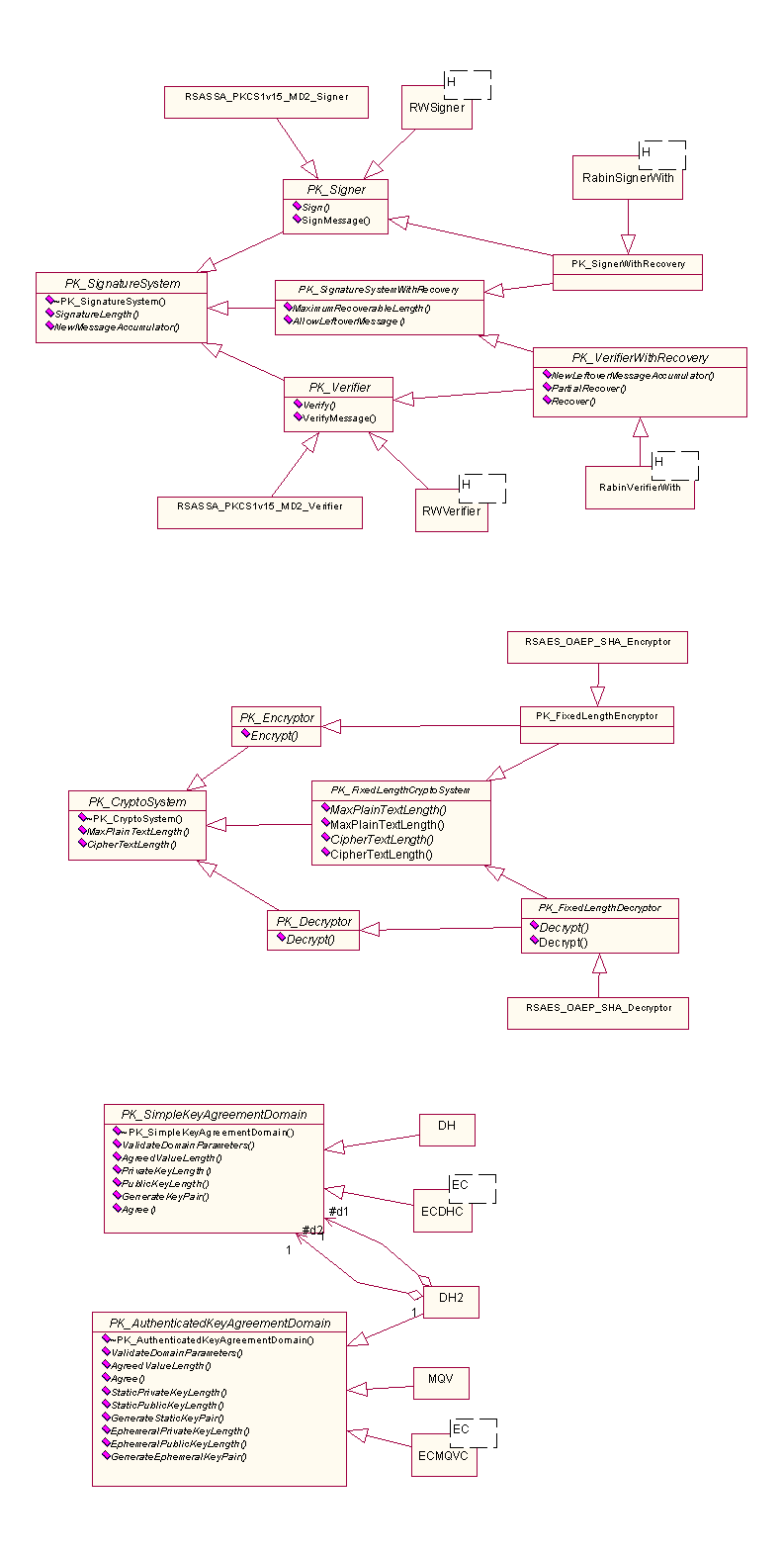
View these Crypto++ class hierarchy charts to see
how Crypto++ is organized. Note that these charts only include a small number of
actual algorithms as examples.
Crypto++ used to supply a compiled DLL for Windows platforms. The library is now
listed on the CMVP's Historical
Validation List. It effectively means the library is no longer validated. If you
are interested in sponsoring a validation, then please send a message to the mailing
list to start a conversation.
You can find the FIPS DLL downloads on the Downloads
page.
Crypto++ attempts to resist side channel attacks using various remediations. We
believe the library is hardened but the remdiations may be incomplete. The first line
of defense uses hardware instructions when possible. The library also uses
constant-time, cache-aware algoirthms and access patterns to minimize leakage. If you
suspect or find an information leak then please report it.
Elliptic curves over binary fields are believed to leak information. The task is a
work in progress. We don't believe binary fields are used in production, so we feel it
is a low risk at the moment.
Crypto++ does not enagage Specter remediations at this time. The GCC options for
Specter are -mfunction-return=thunk and -mindirect-branch=thunk. If
you want the Specter workarounds then add the GCC options to your CXXFLAGS
when building the library. The library tests the options and they should work as
expected.
The source code and its planned changes are available at the following
locations.
The Crypto++ GitHub repository
allows you to view the latest (unreleased) Crypto++ source code via the Linux kernel's git beginning around June
2015. Its also serves as an incubator to nuture and grow the library.
The Roadmap on the wiki provides the general direction
the library is heading. It includes planned features and releases, and even some
wishlist items.
Contributions of all types are welcomed. Contributions include the following.
Bug finding and fixes
Features and enhancements
Test scripts and test cases
Branch and release testing
Documentation and updates
If you think you have found a bug in the library, then you should discuss it on the
Users mailing list.
Discussing it will help bring the issue to the attention of folks who can help resolve
the issue. If you want to contribute a bug fix to the library, then make a Pull Request
or make a Diff available somewhere. Also see Bug Reports
on the wiki.
Features and enhancements are welcomend additions to the library. This category
tends to be time consuming because algorithms and their test cases need to be reviewed
and merged. Please be mindful of the test cases, and attempt to procure them from an
independent source.
The library cherishes test scripts and test cases. They ensure the library is fit
and they help uncover issues with the library before users experience them. If you have
some time, then write some test cases, especially the ones that are intended to break
things.
Branch and release testing is your chance to ensure Master (and planned merges)
meets your expectations and perform as expected. If you have a few spare cycles, then
please test Master on your favorite platform. We need more testing on MinGW, Windows
Phone, Windows Store, Solaris 10 (and below), and modern iOS and OS X (including TV and
Watch builds).
Documentation and updates includes both the inline source code annotations using
Doxygen, and the online information provided in the wiki. The wiki is more verbose and
usually provides more contextual information than the API reference. Besides testing,
documentation is one of the highest returns on investment.
If you are interested in paid support for Crypto++ or consulting on a Crypto++
related project, then please see this list of companies and
individuals providing services on the wiki. This listing is a free service for the
Crypto++ community, and anyone may sign up to be listed by creating an account on the wiki.

 Visitors since April 2014.


